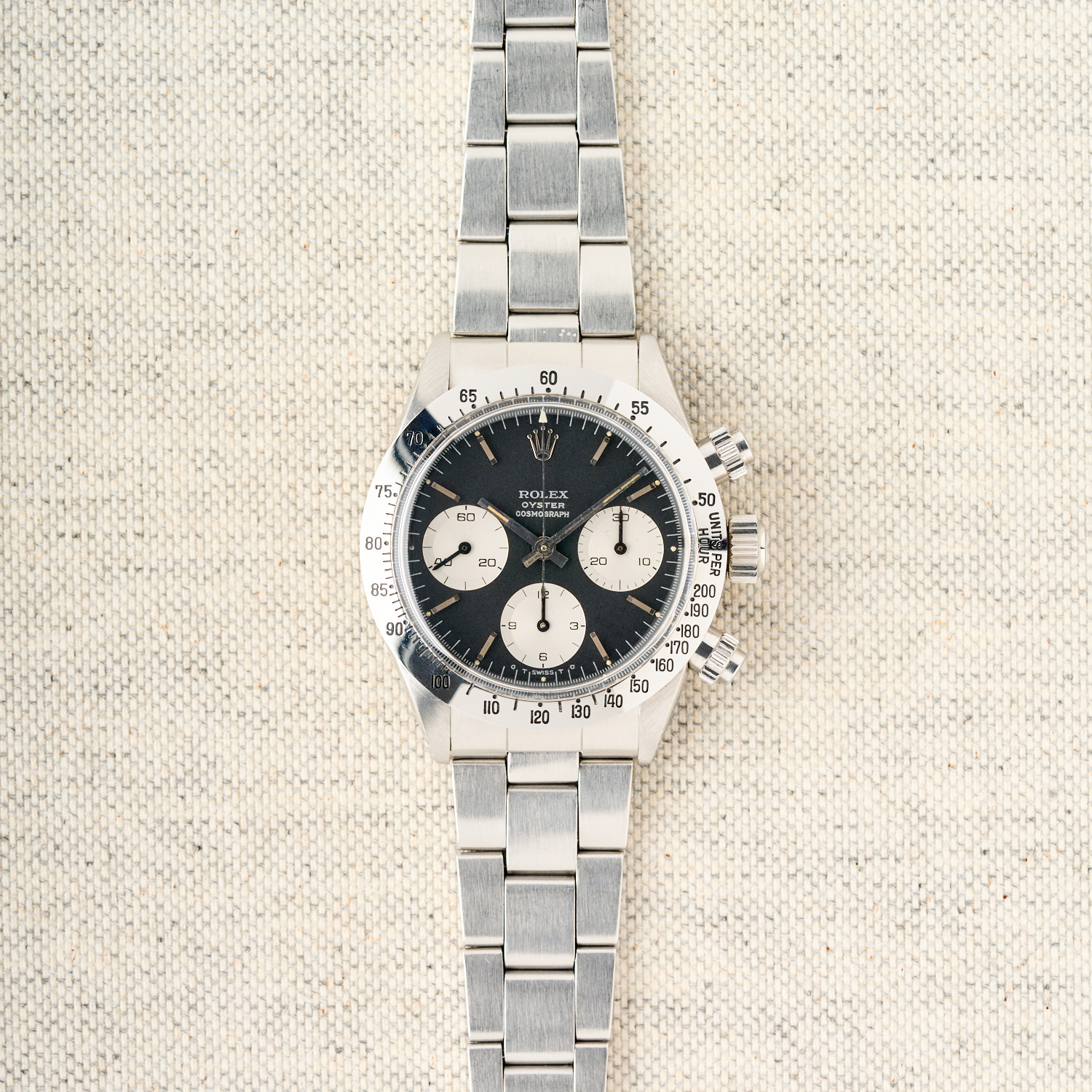
Rolex Cosmograph Daytona 6265 - Black MK2 ‘Sigma’ Dial - Oyster Folded Bracelet
Description
Rolex Cosmograph Daytona 6265 - Black MK2 ‘Sigma’ Dial - Oyster Folded Bracelet
In the world of collecting, few timepieces hold the same legendary status and historical significance as the early manually wound Rolex Daytona references. Often referred to as the “4-digit Daytonas”, these models are widely regarded as the foundation of modern sports chronograph collecting and the starting point of one of Rolex’s most iconic lines.
The lineage began in the early 1960s with the introduction of the first Cosmograph Daytona references, including the now highly important ref. 6239. Developed to answer the growing demand for professional racing chronographs, the Daytona was closely linked to motorsport culture and the world-famous Daytona International Speedway, from which it takes its name. Early models established the core design language of the collection, with contrasting subdials, tachymeter bezels and a strong focus on legibility. This evolution culminated in the 1970s with the final generation of manually wound Daytonas, most notably references 6263 and 6265.
These models represent the ultimate refinement of the hand-wound era before Rolex transitioned to automatic chronographs in 1988. The key distinction between them lies in the bezel configuration: the 6263 features a black acrylic insert, while the 6265 is fitted with an engraved stainless steel bezel.
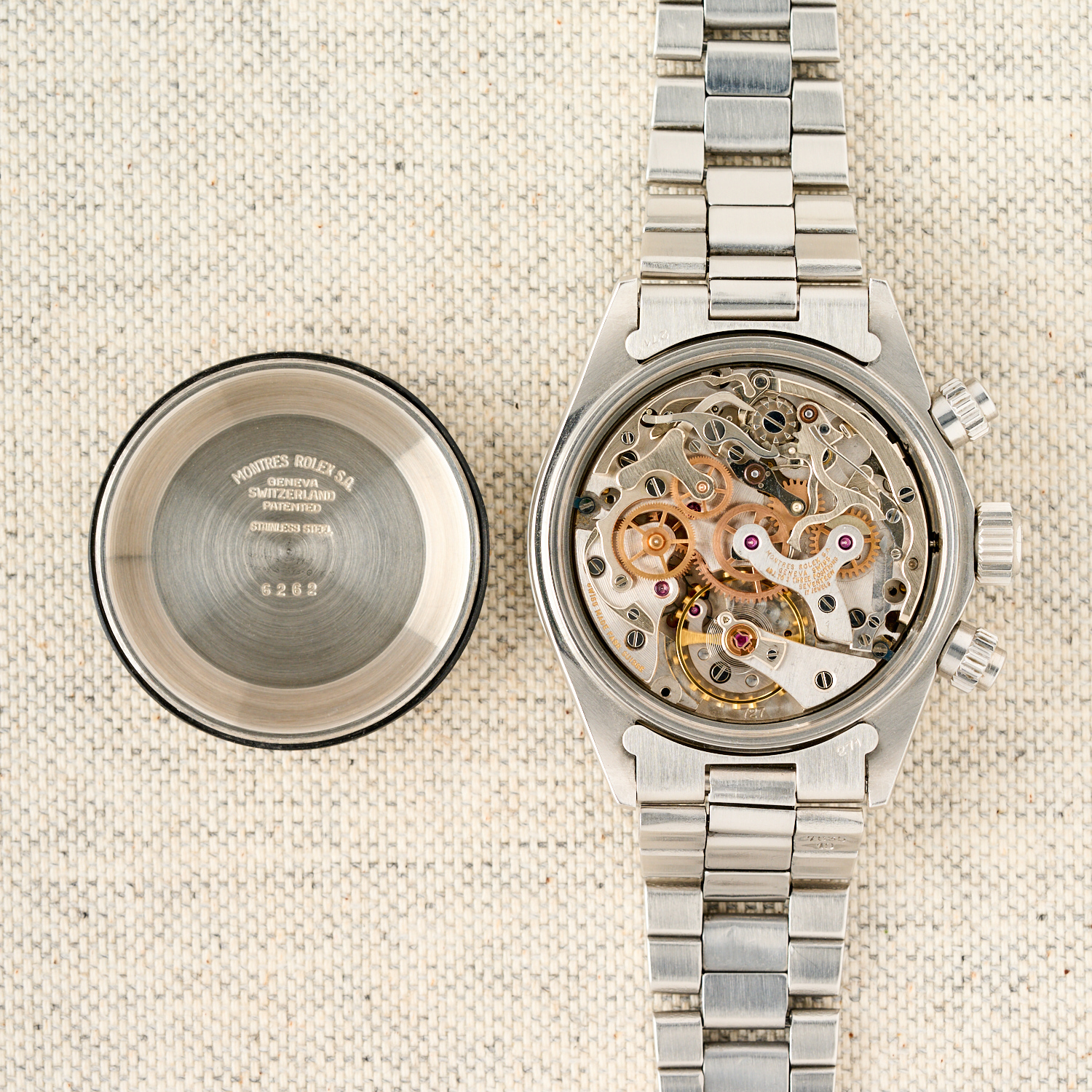
Both share the same robust Oyster case architecture and professional chronograph purpose. At the heart of these references beats the Valjoux 727, a highly refined version of the legendary Valjoux 72, upgraded to a higher frequency for improved precision and chronograph performance. Rolex also introduced important technical developments during this period, including the 7mm Triplock crown, screw-down pushers and reinforced Oyster case construction.
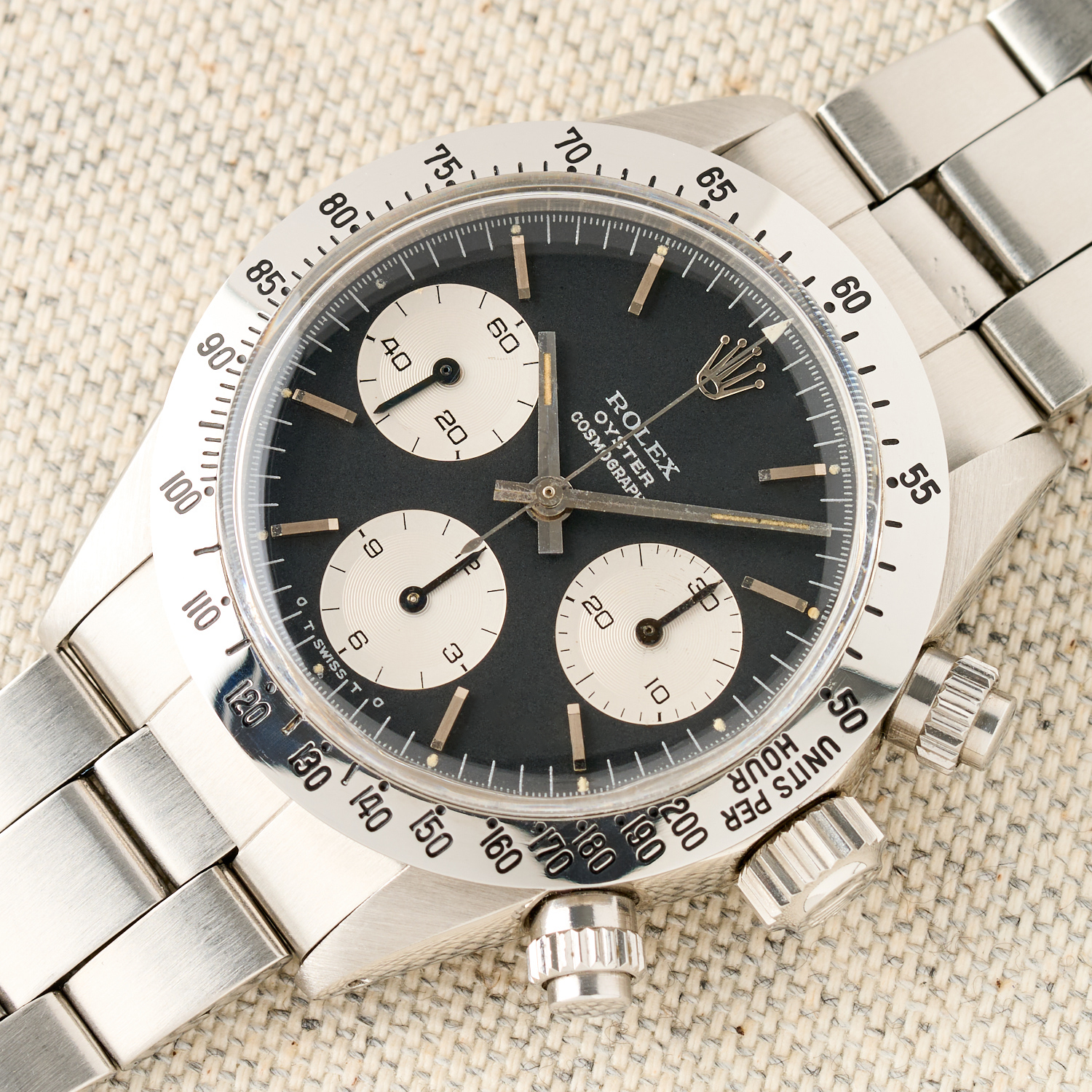
Among the most fascinating dial configurations of the era are the so-called “Sigma” dials, identified by the small Greek sigma symbols positioned alongside the “T SWISS T” designation at 6 o’clock. These markings are generally associated with the use of precious-metal applied hour markers and reflect an important transitional detail in Rolex’s dial production during the 1970s.
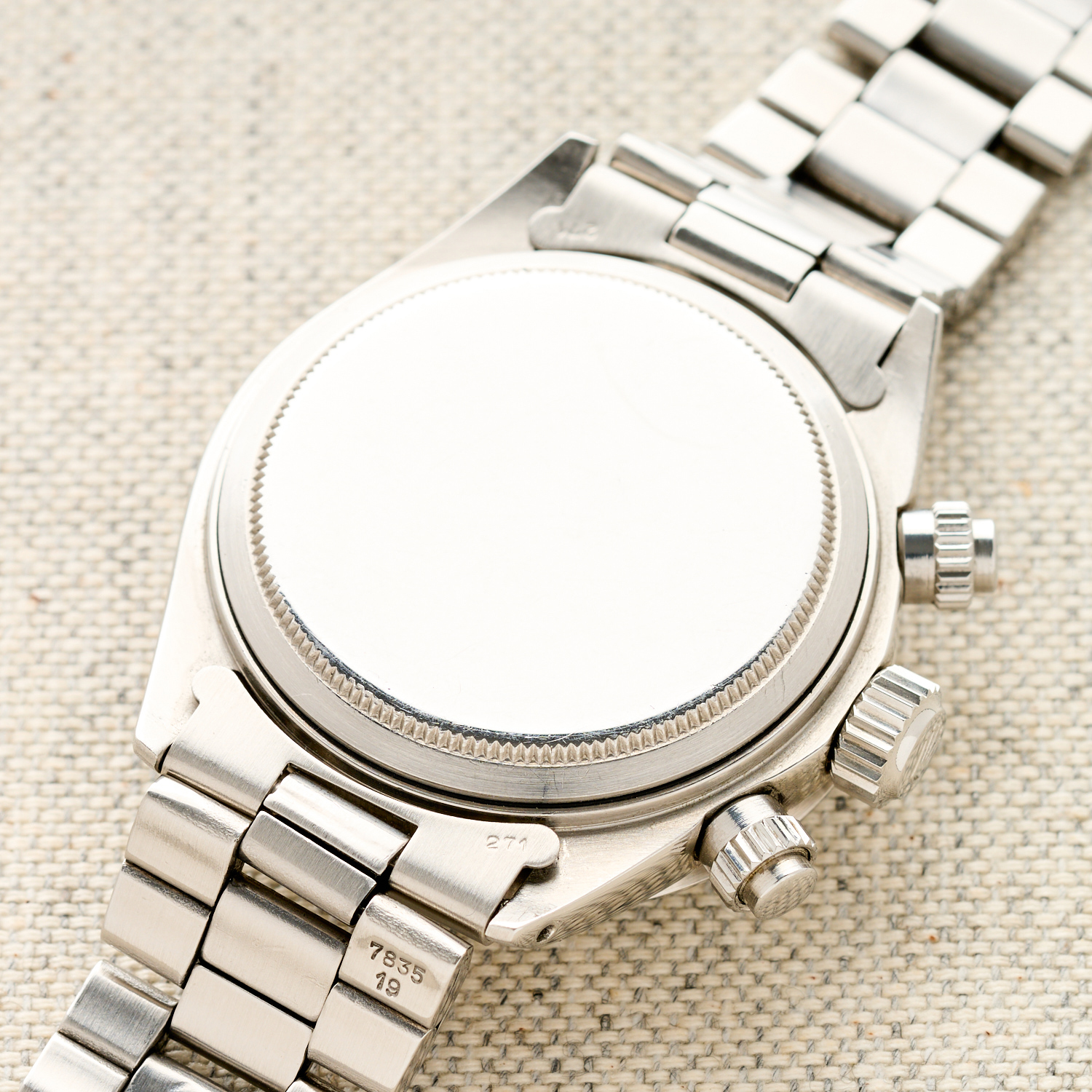
The black Sigma dials, particularly those with silver graphics, are highly appreciated for their elegant contrast and rarity. This particular Rolex Cosmograph Daytona reference 6265, produced in 1973, is fitted with a highly desirable black Sigma “MK2” dial featuring silver graphics. The watch is preserved in very good overall condition, with the case retaining well-defined geometries and showing signs of careful polishing over the years.
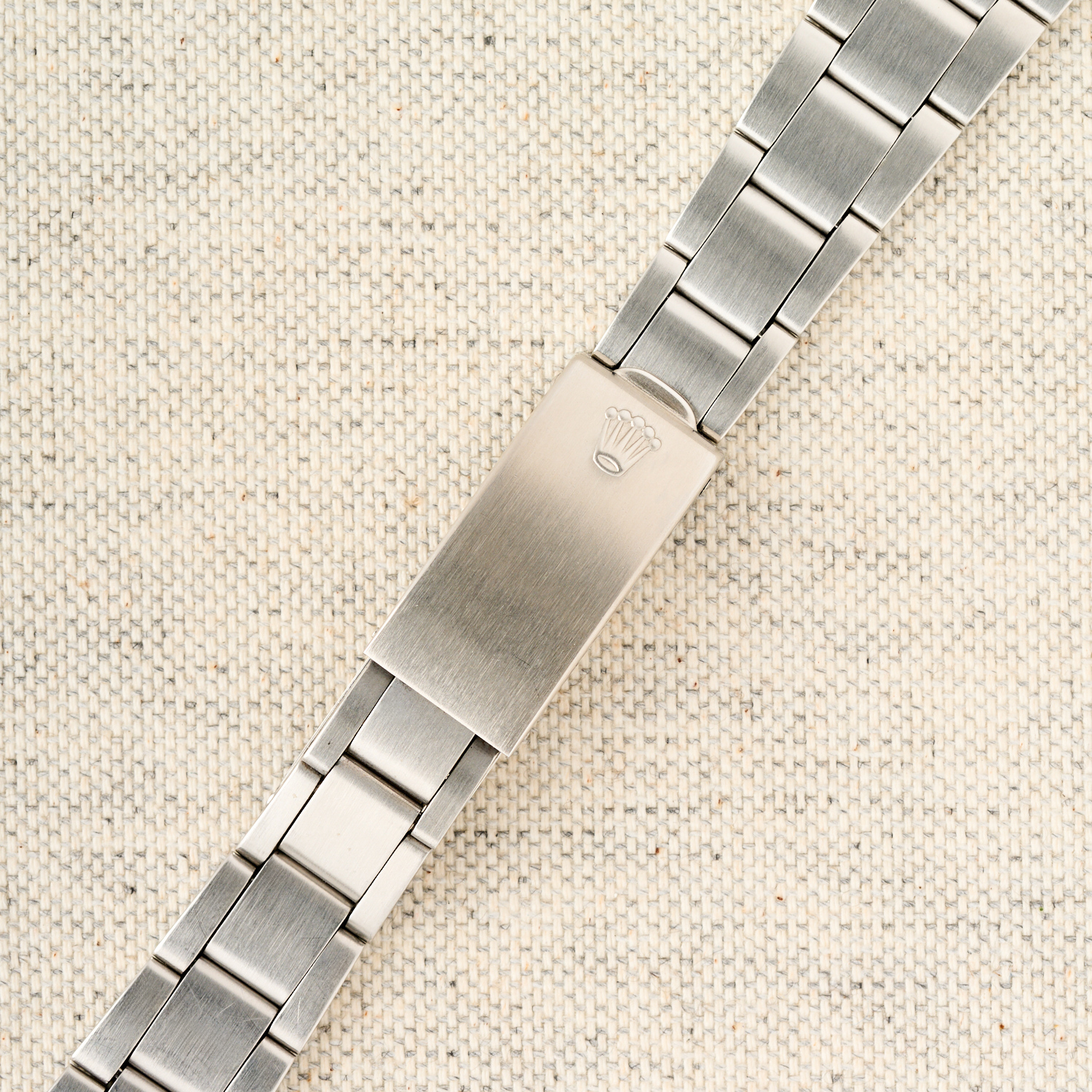
The bracelet remains in good condition, showing the expected play between the links, consistent with normal use over the decades.
Overall, this example represents an attractive and historically significant iteration of the 6265, combining the unmistakable architecture of the final hand-wound Daytona generation with the rarity and distinctive character of its black Sigma MK2 dial.
Buyer protections
- Payments and personal data will be handled confidentially.
- All watches undergo rigorous quality checks by experts.
Details
| BRAND | Rolex |
|---|---|
| MODEL | Cosmograph Daytona |
| REFERENCE | 6265 |
| YEAR | 1973 circa |
| CASE SIZE | 37mm |
| CASE MATERIAL | Stainless Steel |
| STRAP/BRACELET MATERIAL | S. Steel Oyster Folded, max lenght up to 18.2cm circa (12 Links total) |
| GLASS | Plexiglass |
| MOVEMENT | Mechanical Manual Winding, Cal. 727 |
| DIAL | Black MK2 ‘Sigma’ Dial |
| BEZEL | Stainless Steel, Engraved |
| CLASP/BUCKLE | Stainless Steel Deployante, No Clasp Code |
| SET | No |
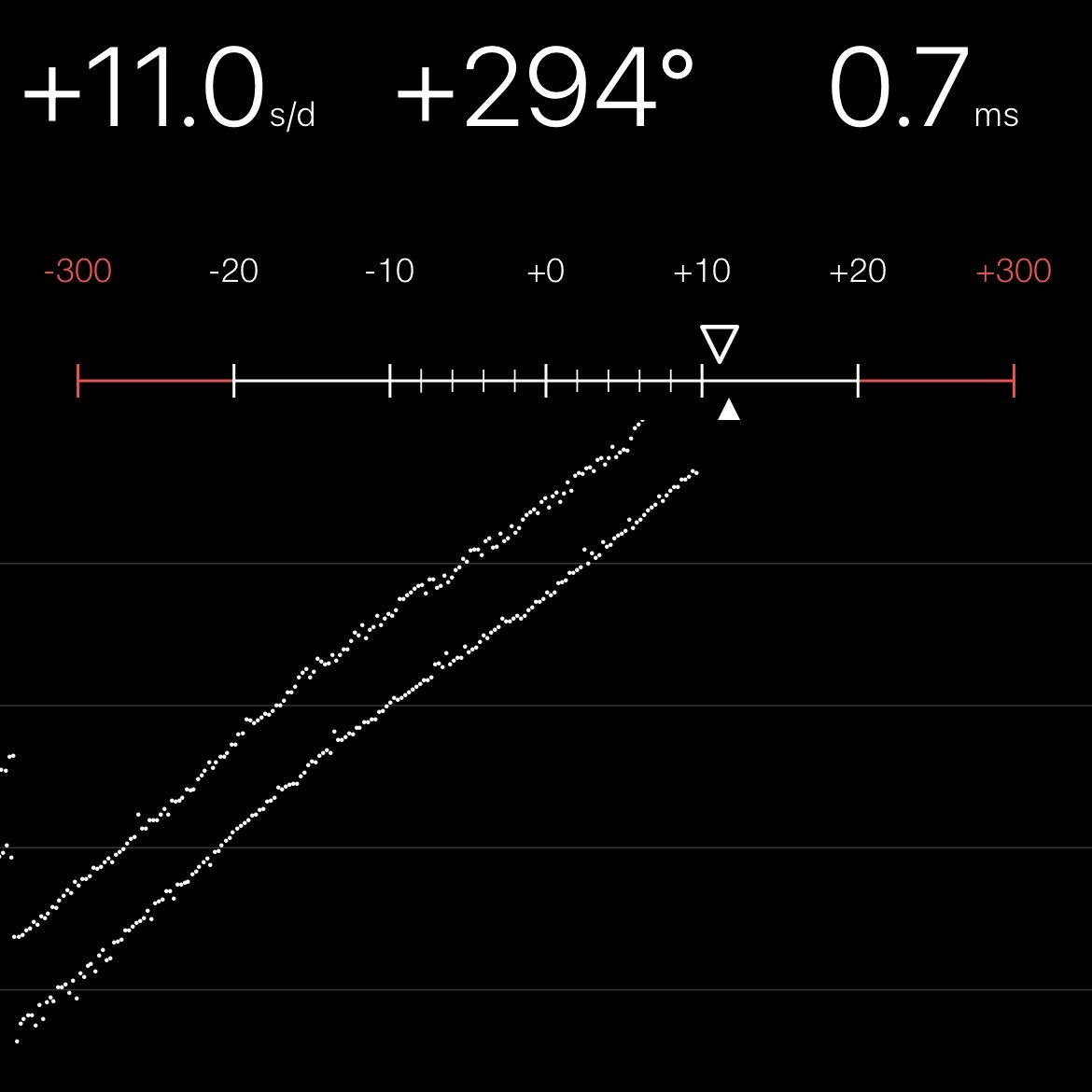
Chronocomparator
This watch is used and has not been serviced or cleaned by us. If you wish to request this service, please make an express request. The measurement of the functioning of the watch on the chronocomparator is provided as a courtesy and with the aim of giving users as much information as possible.
Questions and answers
No questions present at the moment